 FuninVR
What VR Equipment Works Best for Entertainment Centers?
Entertainment centers are built around one core goal: delivering memorable experiences that keep visitors coming back. As audiences look for more immersive and interactive attractions, VR equipment for entertainment centers has become one of the most effective ways to stand out.
That said, not all VR systems perform equally well in this environment. The best results come from choosing equipment designed specifically for high-traffic, commercial operation.
What VR Equipment Works Best for Entertainment Centers?
What Makes VR Equipment Suitable for Entertainment Centers?
Unlike home VR, commercial VR equipment must handle continuous use, diverse user groups, and fast turnover. Entertainment centers need systems that are durable, visually attractive, and easy for staff to manage.
Key requirements usually include:
-
High reliability for daily operation
-
Short, repeatable experience cycles
-
Strong visual presence to attract walk-in traffic
-
Simple onboarding for first-time users
Popular Types of VR Equipment in Entertainment Centers
1.VR Arcade Machines
VR arcade machines remain a core attraction in many entertainment centers. These systems are typically enclosed, coin- or card-operated, and designed for single or two-player experiences.
They work well because they:
-
Fit easily into arcade-style layouts
-
Offer clear pricing per play
-
Require minimal explanation for users
2.Motion Simulators and VR Racing Systems
Motion-based VR equipment—such as racing simulators or flight simulators—adds physical movement to the experience. This type of VR simulator is especially popular with competitive and thrill-seeking players.
Short session times and strong sensory feedback make these systems ideal for repeat play.
3.VR Shooting and Action Platforms
Interactive VR shooting systems are another strong performer in entertainment centers. These experiences emphasize fast-paced gameplay, intuitive controls, and immediate engagement.
Multi-level difficulty settings help attract both casual players and more experienced users.
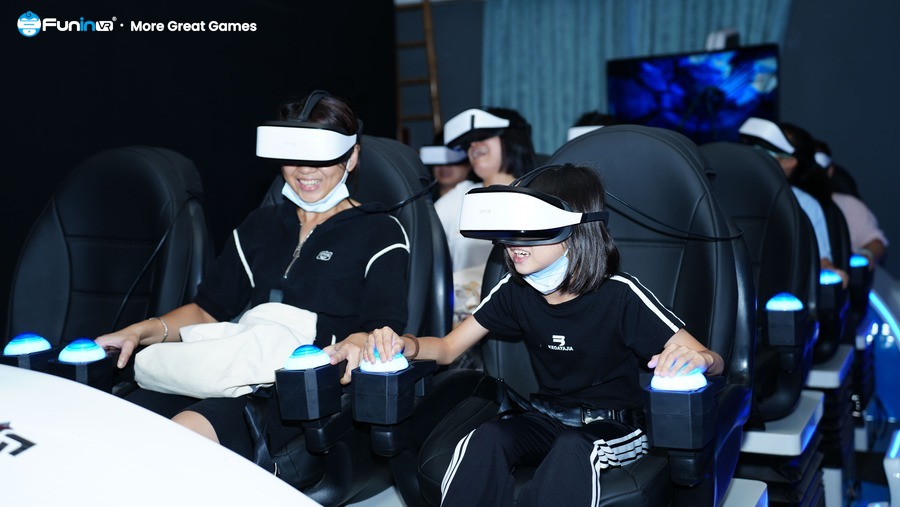
4.VR Motion Theaters for Group Play
For entertainment centers with larger spaces, VR motion theaters allow multiple players to experience the same content at once. This increases throughput and works well for families or group visitors.
Group-based VR also creates a stronger “spectator effect,” naturally drawing attention from nearby guests.
5.Space Planning and Equipment Combination
Successful entertainment centers rarely rely on just one type of VR attraction. Instead, they combine different VR equipment types to serve multiple age groups and play styles.
As a source manufacturer, FuninVR often helps operators design multi-device layouts—mixing arcade machines, motion simulators, and VR theaters into one cohesive entertainment zone.
6.Content Variety and Long-Term Operation
Hardware alone does not guarantee success. Entertainment centers depend on fresh content to encourage repeat visits. Systems that support regular content updates and localized themes perform better over time.
Manufacturers with in-house or integrated content development teams can provide a more sustainable operating model by expanding game libraries and offering custom VR experiences.
When selecting VR equipment for entertainment centers, operators should look beyond appearance and price. Experience with commercial deployment, safety standards, and after-sales support all matter.
With a wide range of VR and arcade equipment—covering shooting, racing, motion, and cinematic experiences—FuninVR positions itself as a full-solution provider rather than a single-product supplier.
So, what VR equipment works best for entertainment centers? The answer lies in choosing commercial-grade systems that balance immersion, durability, and operational efficiency.
By combining the right mix of VR arcade machines, simulators, and motion theaters—and partnering with an experienced manufacturer—entertainment centers can build attractions that stay profitable and engaging over the long term.