 FuninVR
What is VR Motorcycle Racing?
Ever leaned into a high-speed corner, feeling the bike respond to your every shift in weight, with the roar of the engine and rush of wind making your adrenaline spike? VR Motorcycle Racing delivers this exact sensation, but within the safety and limitless possibilities of the virtual world. It is a premium immersive experience that combines a realistic motorcycle simulator with cutting-edge virtual reality technology to create the most authentic feeling of riding on the market today.
This is not a simple video game played with a handheld controller. VR Motorcycle Racing is a sophisticated, often commercial-grade attraction where you physically sit on a realistic motorcycle rig. As you lean, throttle, and brake, a synchronized motion platform tilts and banks the entire bike, while a high-fidelity VR headset transports you onto legendary race tracks, through city streets, or across fantastical landscapes. It’s the closest you can get to the thrill of MotoGP without the physical risk.
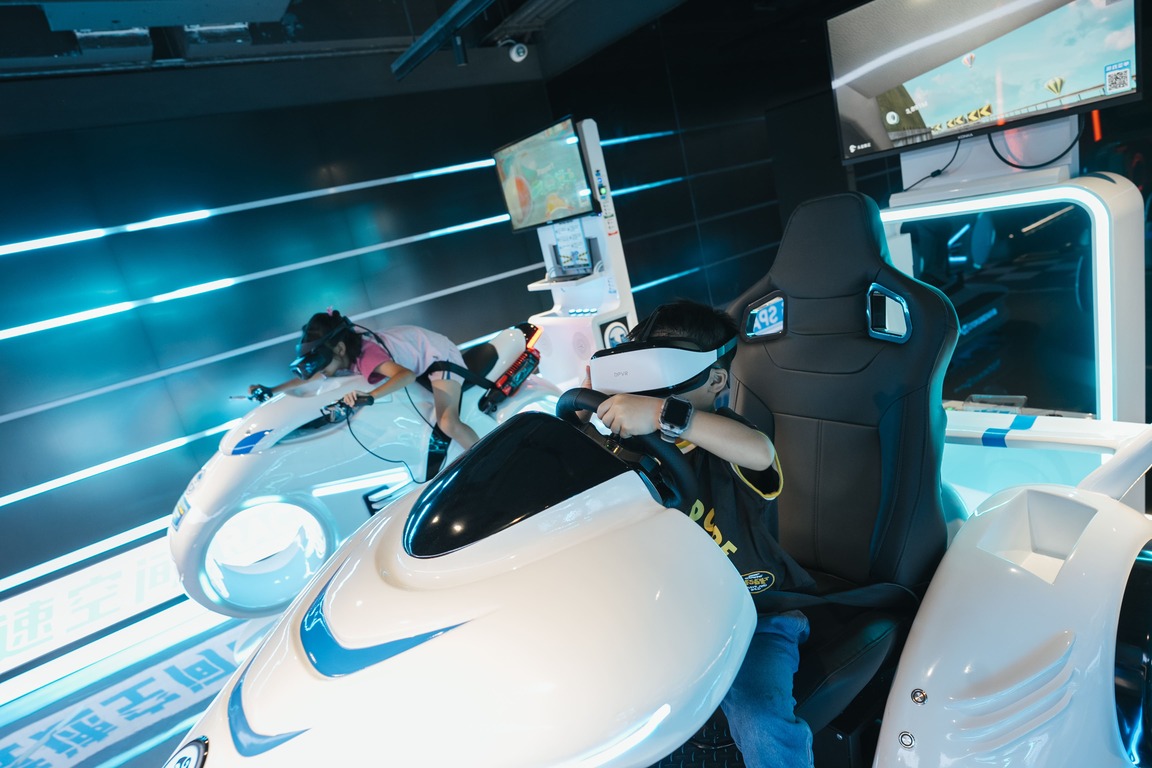
Core Technology: How a VR Motorcycle Simulator Works
A professional VR motorcycle simulator is an engineered system where hardware and software work in perfect harmony to trick your senses into believing you’re moving at speed. The experience is built on several key technological pillars:
-
The Motion-Enabled Motorcycle Rig (The Physical Interface):
This is a specially designed motorcycle frame mounted on a motion platform. Unlike a static bike, this platform uses electric or hydraulic actuators to physically tilt (roll) and sometimes lift (heave) the bike in real-time. When you lean left to take a corner, the entire rig leans with you, providing the crucial physical feedback that matches what you see in the headset. -
High-Definition VR & Audio (The Digital World):
A wide-field-of-view VR headset provides a stunning, 360-degree view of the track. High-resolution graphics and precise head-tracking sell the illusion of speed and depth. Coupled with spatial 3D audio—where you can hear other bikes approach from behind or the engine note change as you shift—the visual and auditory immersion is complete. -
Realistic Controls & Force Feedback (The Tactile Connection):
The simulator features authentic controls: handlebars with precise force feedback that shakes and resists to simulate front-wheel traction loss, engine vibration, and road texture; a responsive throttle; and a progressive hydraulic or load-cell brake lever. This tactile feedback is essential for advanced riding techniques and vehicle control. -
The Integration Software (The Brain):
Specialized simulation software acts as the central nervous system. It takes your control inputs (steering, throttle, brake), calculates the bike’s physics and position on the track, and sends two streams of data: the visual scene to the VR headset and the corresponding motion commands to the motion platform. This low-latency synchronization is critical for preventing simulator sickness and achieving realism.
VR Motorcycle Racing systems are primarily designed for commercial and professional use due to their complexity and cost.
-
Location-Based Entertainment (LBE): This is the most common public-facing application. These simulators are star attractions in VR arcades, dedicated racing centers, Family Entertainment Centers (FECs), and theme parks. They offer a safe, accessible, and exhilarating way for anyone to experience the thrill of motorcycle racing.
-
Professional Rider Training: Motorcycle safety organizations and advanced riding schools are increasingly using VR simulators for risk-free training. Riders can practice collision avoidance, emergency braking, and hazard perception in a fully controlled environment.
-
Brand Experience & Marketing: Major motorcycle manufacturers (e.g., Ducati, Yamaha) deploy these simulators at auto shows, dealerships, and brand pavilions. They allow potential customers to “test ride” new models in spectacular virtual environments, creating a powerful emotional connection to the brand.
For both operators and users, VR Motorcycle Racing offers unique value that static simulators or traditional games cannot match.
-
Unmatched Immersion & Realism: The combination of full-body motion, 1:1 physical leaning, and VR visuals creates a profound sense of presence. It’s an adrenaline-fueled experience that feels more like a memory of a real ride than playing a game.
-
Safe Skill Development: It provides a perfect sandbox to understand bike dynamics, practice cornering lines, and improve reaction times without any consequences. The immediate physical feedback accelerates the learning process.
-
A Powerful Commercial Draw: For venue operators, a well-integrated VR motorcycle simulator is a high-impact attraction. It commands premium pricing, has strong repeat-play appeal, and serves as a powerful social media draw due to its visually engaging nature.
-
Accessibility & Inclusivity: It opens up the world of high-performance riding to those who may not have a motorcycle license, access to a track, or the desire to take on real-world risks, all while delivering 95% of the visceral excitement.
VR Motorcycle Racing represents the pinnacle of immersive two-wheeled simulation. By seamlessly blending a dynamic physical rig with a convincing virtual world, it transcends gaming to become a genuine experiential attraction. It captures the pure essence of riding—the freedom, the focus, and the physical dance with machinery—in a format that is both safe and endlessly versatile.
For businesses looking to captivate audiences with a unique, high-octane offering, investing in a commercial-grade VR motorcycle racing simulator is a strategic move. It delivers the kind of unforgettable, shareable experience that drives foot traffic, builds brand loyalty, and firmly establishes a venue as a destination for cutting-edge entertainment.