 FuninVR
2026 Tendências do mercado de arcade VR dos EUA & Oportunidades de investimento
The location-based VR entertainment market is entering its strongest growth phase yet. For entrepreneurs considering entering the VR arcade business, 2026 offers a strategic window of opportunity.
This guide examines current market data, growth projections, investment requirements, and practical insights to help you make an informed decision. For a step-by-step breakdown of startup costs, read our [Como iniciar um negócio lucrativo de arcade VR nos EUA] guide.
2. Market Size & Growth Projections
The numbers paint a clear picture of an expanding market.
2.1 US Location-Based Entertainment Market
The United States location-based entertainment market is forecasted to expand at a CAGR of 9.78% from 2026 through 2033. Within this segment, virtual reality experiences held the leading position among entertainment types in 2024, a trend that continues strengthening.
2.2 Global Location-Based VR Market
Global location-based VR market data shows consistent acceleration:
| Year | Market Size | Growth |
|---|---|---|
| 2025 | USD 2.1 billion | — |
| 2026 | USD 2.76 billion | +31.4% |
| 2031 | USD 10.69 billion (projected) | 31.2% CAGR |
The market is forecast to reach USD 10.69 billion by 2031.
2.3 Immersive Entertainment Market
On a broader scale, the global immersive entertainment market was valued at USD 146.56 billion in 2025 and is projected to reach USD 1,231.28 billion by 2034, exhibiting a CAGR of 26.68%. This massive expansion signals sustained consumer appetite for experiential entertainment.
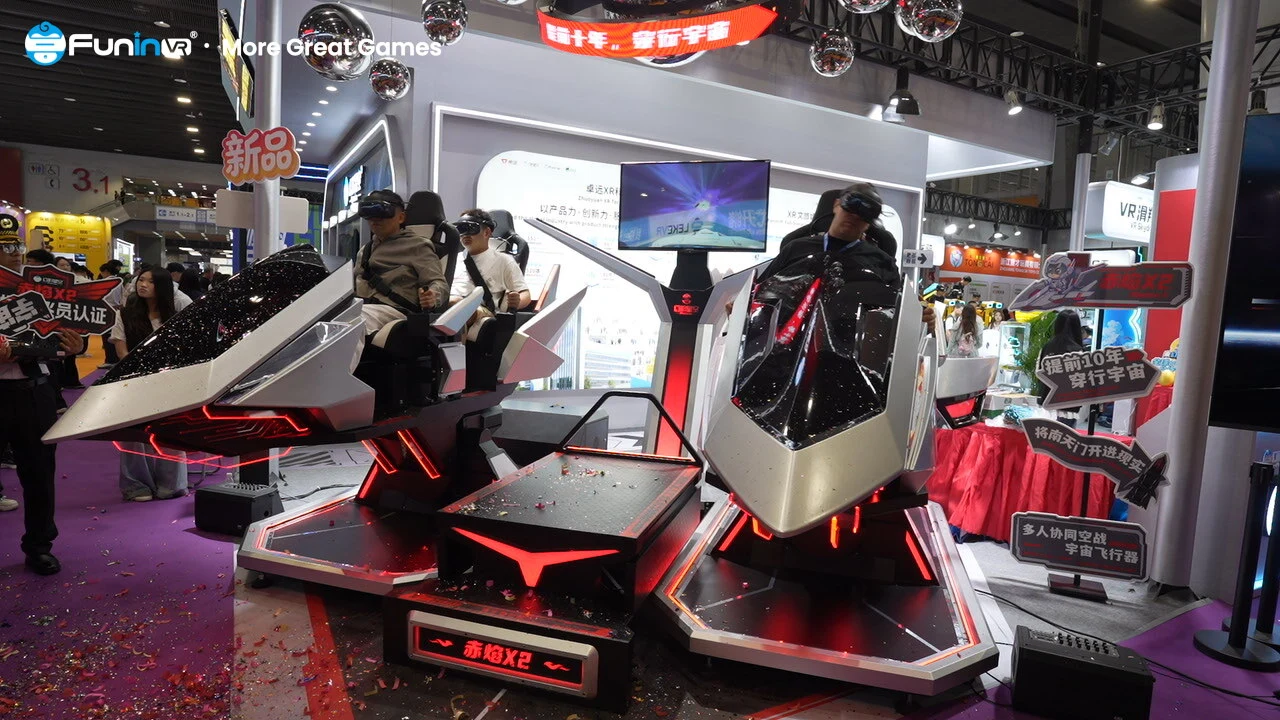
2026 Tendências do mercado de arcade VR dos EUA & Oportunidades de investimento
3. Key Trends Driving Growth in 2026
3.1 VR Experiences Lead the Segment
Virtual reality continues to outperform other location-based entertainment types in both market share and growth rate. Investors are consistently choosing VR attractions over traditional arcade games.
3.2 Mixed Reality & Contactless Technology
Industry reports for 2026 highlight the growing integration of mixed reality and versatile payment systems across amusement venues. Modern arcades are increasingly adopting location-specific mobile apps, self-service kiosks, and digital signage to enhance customer experience.
3.3 VR as Part of a Diversified Attraction Mix
Industry analysis suggests that in 2026, VR is best treated as part of a broader attraction mix rather than a standalone business model. Successful operators combine VR simulators with other entertainment options to maximize customer dwell time and per-visit spending.
4. Investment Requirements & ROI Projections
4.1 VR Arcade Startup Costs (2026 Estimates)
Based on current industry benchmarks:
| Venue Size | Total Investment | Typical Setup |
|---|---|---|
| Small arcade (4–6 machines) | USD 50,000 – 100,000 | 1 multi-seat anchor + 3–5 single units |
| Medium FEC (7–15 attractions) | USD 100,000 – 250,000 | Mix of simulators + small 5D cinema |
| Large FEC (16+ attractions) | USD 250,000 – 500,000 | Full entertainment destination |
4.2 Profit Margins & Breakeven Timelines
Well-operated arcades typically achieve:
-
Net profit margins:20%–40% depending on location and operational efficiency
-
Breakeven period:12–24 months for most operators; high-traffic venues may achieve 6–12 months
Key factors affecting profitability include location foot traffic, pricing strategy, equipment utilization rate, and machine efficiency.
4.3 Larger Investments: 5D Cinemas & Atrações Premium
For larger investments like 5D cinemas or multiple simulator bays, payback may extend to 24–48 months depending on demand, pricing, and market conditions.
5. Esports & Competitive Gaming: A Growing Opportunity
Esports-themed VR arenas are attracting significant investment in 2026. EVA (Esports Virtual Arenas) recently closed a €35 million funding round to expand from 70 to over 200 locations across Europe. This validates the competitive gaming model for VR arcades.
Why this matters for your arcade: Adding multiplayer competitive features to your equipment mix can attract organized events, school groups, and corporate team-building activities, diversifying revenue beyond walk-in traffic.
6. Technology & Equipment Trends
6.1 Declining Equipment Costs
VR equipment costs have decreased approximately 30% since 2022 while ticket prices have remained stable. This improves ROI calculations significantly for new entrants.
6.2 Content Refresh Cycles
Regular content updates are critical for repeat business. Leading manufacturers now provide monthly game updates for VR simulators and quarterly film libraries for 5D cinemas.
6.3 Remote Support Becomes Standard
24/7 remote technical support has become an industry expectation, reducing downtime and protecting revenue. Buyers should prioritize suppliers offering robust after-sales support.
7. Regional Insights: The US Market
The United States represents the largest and most mature location-based VR market globally. Key characteristics include:
-
Strong consumer awareness of VR technology
-
Higher average ticket prices (USD 8–15 per play) compared to emerging markets
-
Sophisticated operator expectations regarding certification, after-sales support, and content quality
8. Is 2026 the Right Time to Invest?
Arguments for investing now:
-
Strong projected growth: US market CAGR of 9.78% through 2033
-
Lower equipment costs: Entry barrier reduced by approximately 30%
-
Proven business models: Successful case studies available across multiple venue types
-
Attractive ROI: 12–24 month breakeven for most operators
Considerations before investing:
-
Location is critical: Foot traffic remains the primary success factor
-
Supplier selection matters: Content updates and after-sales support significantly impact long-term profitability
-
Space requirements: Proper planning prevents costly mistakes
9. Frequently Asked Questions
Q1: How much does it cost to open a VR arcade in the US in 2026?
A: Total investment typically ranges from USD 50,000 for a small 4-machine setup to USD 500,000 for a large FEC with 20+ attractions. Equipment accounts for 40–60% of total investment.
Q2: What is the average profit margin for a VR arcade?
A: Well-operated arcades typically achieve 20%–40% net profit margins, depending on location, pricing strategy, and operational efficiency.
Q3: How long does it take to break even?
A: Most operators achieve breakeven within 12–24 months. High-traffic venues may see returns in 6–12 months, while larger investments like full 5D cinemas may take 24–48 months.
Q4: What equipment has the fastest ROI?
A: High-turnover machines with short session cycles typically deliver fastest returns. VR simulators with 5–8 minute sessions can achieve high daily customer throughput.
Q5: Do I need prior arcade experience?
A: Not necessarily. Many successful VR arcade owners come from retail, hospitality, or tech backgrounds. The key is partnering with a supplier that provides comprehensive training and ongoing support.
Q6: How important are content updates?
A: Critical. Regular game and film updates (monthly for VR simulators, quarterly for cinemas) drive repeat customers and protect long-term revenue.
10. Conclusão
The US location-based VR market is on a clear growth trajectory, with projected 9.78% CAGR through 2033. Combined with declining equipment costs, proven business models, and increasing consumer demand for experiential entertainment, 2026 presents a compelling window for new entrants.
Success depends on three factors:
-
Choosing the right location with strong foot traffic
-
Selecting a supplier that offers quality equipment, regular content updates, e 24/7 support
-
Planning your space and equipment mix to maximize revenue per square foot
FuninVR (www.9dxr.com) has supplied VR attractions to thousands of arcade owners worldwide and offers free consultation on equipment selection and layout planning.
Ready to explore your investment? Contact FuninVR with your space dimensions and budget for a free equipment recommendation.