 Divertimento VR
Come scegliere l'attrezzatura commerciale per parchi giochi al coperto?
Choosing the right commercial indoor playground equipment is one of the most important decisions when building a successful family entertainment business. Whether you are planning an indoor playground, a family entertainment center (FEC), or a shopping mall play area, the equipment you select will directly impact customer experience, safety, and long-term profitability.
So how do you make the right choice? Here’s a practical guide to help you evaluate your options and invest wisely.
Come scegliere l'attrezzatura commerciale per parchi giochi al coperto?
Interactive and Digital Play Equipment
What they are: Interactive projection floors, digital climbing walls, motion-sensor games, augmented reality (AR) play tables, and multiplayer screen-based attractions.
Best for: All ages, with content customizable by difficulty. Particularly effective for engaging older children (8–14) who find purely physical play less compelling.
What to look for:
- Content library depth: The hardware is only as good as the software behind it. Ask how many games or experiences are included, how frequently content is updated, and whether custom content is available.
- Multiplayer capacity: Interactive floors and wall systems that support 4–10 simultaneous players generate far more engagement and throughput than single-player setups.
- Durability of projection/sensor systems: In a commercial environment, projectors and sensors take a beating. Look for industrial-grade components with MTBF (mean time between failures) ratings, not consumer electronics repurposed for commercial use.
- Ease of content management: Staff should be able to switch games, adjust difficulty, and restart systems without technical expertise. Intuitive management interfaces are a must.
- Integration with venue systems: The best interactive equipment integrates with your ticketing, RFID, and booking platforms.
VR and Immersive Experience Attractions
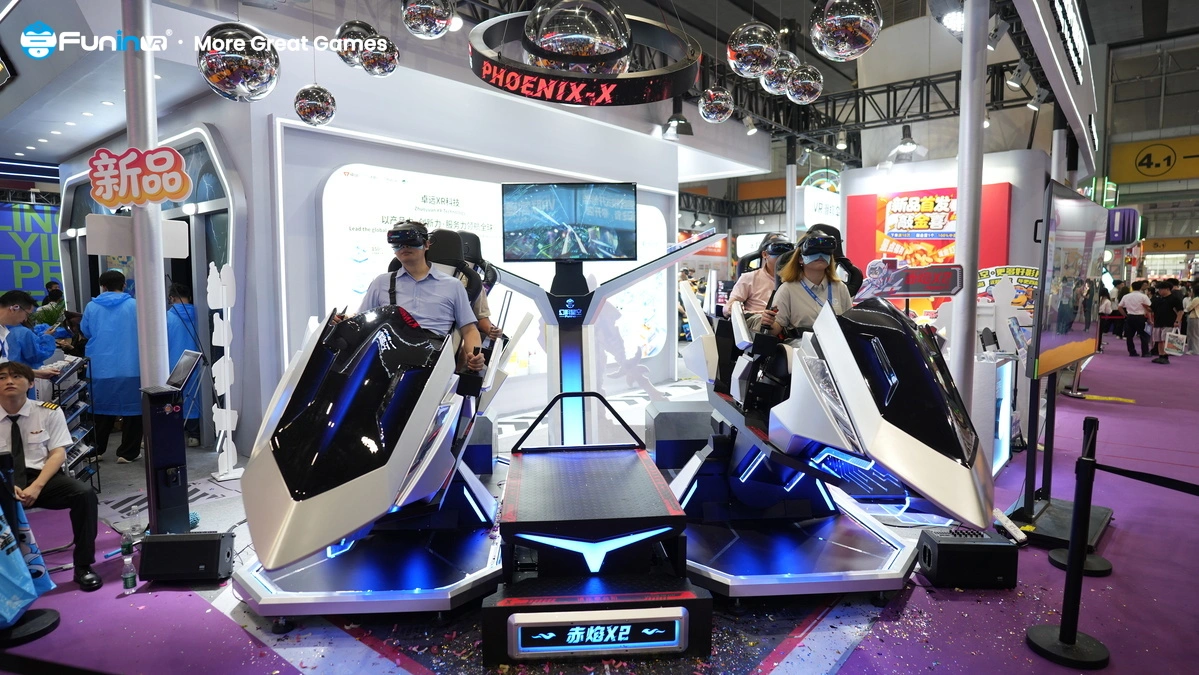
What they are: Virtual reality simulators, VR racing and flying experiences, 9D egg chair cinemas, free-roam VR arenas, and mixed-reality (MR) attractions.
Best for: Ages 8 and up. Extremely high perceived value — guests are willing to pay premium pricing for VR experiences. Strong appeal for teens and adults, making it one of the few equipment categories that genuinely extends your demographic reach upward.
What to look for:
- Hardware generation: VR technology evolves rapidly. Ensure the headsets and tracking systems are current-generation — outdated hardware delivers a noticeably inferior experience that damages your brand.
- Content variety and update cadence: A VR attraction with only 3–5 experiences will bore repeat visitors quickly. Look for platforms with 20+ titles and regular content additions.
- Hygiene systems: VR headsets are shared equipment. Built-in UV sanitization systems or easily replaceable hygiene covers are non-negotiable in commercial settings.
- Throughput capacity: Calculate how many guests per hour each VR unit can serve. Low-throughput attractions create long queues that frustrate guests and reduce revenue per square foot.
- Technical support infrastructure: VR equipment is complex. Ensure your supplier offers remote diagnostics, rapid parts replacement, and on-site service options — downtime on a VR attraction is expensive.
- Space requirements: Free-roam VR arenas require significant clear floor space (typically 100–300 sqm) with specific ceiling height minimums. Confirm spatial requirements before purchasing.
This category is where Divertimento VR has built particular expertise. As a specialist in commercial VR and immersive entertainment solutions, FuninVR offers a comprehensive range of VR attractions — from compact single-player simulators suitable for smaller venues to full free-roam multiplayer arenas for large-scale entertainment centers. Their platform combines current-generation hardware with a regularly updated content library, built-in hygiene systems, and the kind of after-sales technical support that commercial operators actually need.
Rides and Mechanical Attractions
What they are: Kiddie rides, carousel systems, bumper cars, mini roller coasters, and token-operated mechanical rides.
Best for: Ages 2–10 for classic kiddie rides; broader age ranges for bumper cars and larger mechanical attractions.
What to look for:
- Electrical safety certifications: All ride equipment must carry appropriate electrical safety certifications for your market (UL, CE, or equivalent). This is non-negotiable.
- Ride cycle time and throughput: Shorter cycle times mean more guests served per hour. Balance this against the experience quality — rides that feel rushed generate complaints.
- Token vs. RFID operation: Modern venues are moving away from token systems toward RFID wristbands and cashless payment integration. Choose rides that support current payment infrastructure.
- Maintenance accessibility: Mechanical rides require regular inspection and maintenance. Equipment with accessible service panels and clear maintenance documentation reduces downtime.
- Noise levels: In enclosed indoor environments, ride noise accumulates quickly. Check decibel ratings and consider acoustic placement in your layout.