 FuninVR
Guide de localisation de l'arcade VR: 5 Caractéristiques des sites à fort trafic qui génèrent des profits
In the VR arcade business, location is not just important – it’s everything. A mediocre arcade in a great location can thrive, while an amazing arcade in a poor location will struggle to pay rent. This guide walks you through five concrete characteristics to look for when evaluating potential sites. Whether you’re opening your first arcade or expanding, these criteria will help you avoid costly mistakes.
For a complete overview of startup costs and revenue models, see our 2026 US VR Arcade Market Guide.
Characteristic 1: High Foot Traffic with Your Target Audience
Foot traffic alone isn’t enough. You need the droite kind of traffic – people who are willing to spend money on entertainment and have time to spare.
What to look for:
-
Shopping malls: Especially near food courts, cinemas, or children’s play areas. Mall walkers are not your target, but families and teenagers are.
-
Entertainment districts: Areas with bowling alleys, escape rooms, laser tag, or movie theaters. These customers are already in “entertainment mode.”
-
Tourist zones: Beachfronts, historic downtowns, or near major attractions. Tourists are more likely to try VR as a novel experience.
-
University campuses: High density of young adults with disposable income and free time.
How to measure: Visit the site at different times (weekday morning, weekday evening, Saturday afternoon). Use a manual counter or a foot traffic app to estimate passerby count. For a small arcade (4‑6 machines), you generally need at least 2,000–3,000 passersby per day to generate sustainable walk‑in sales.
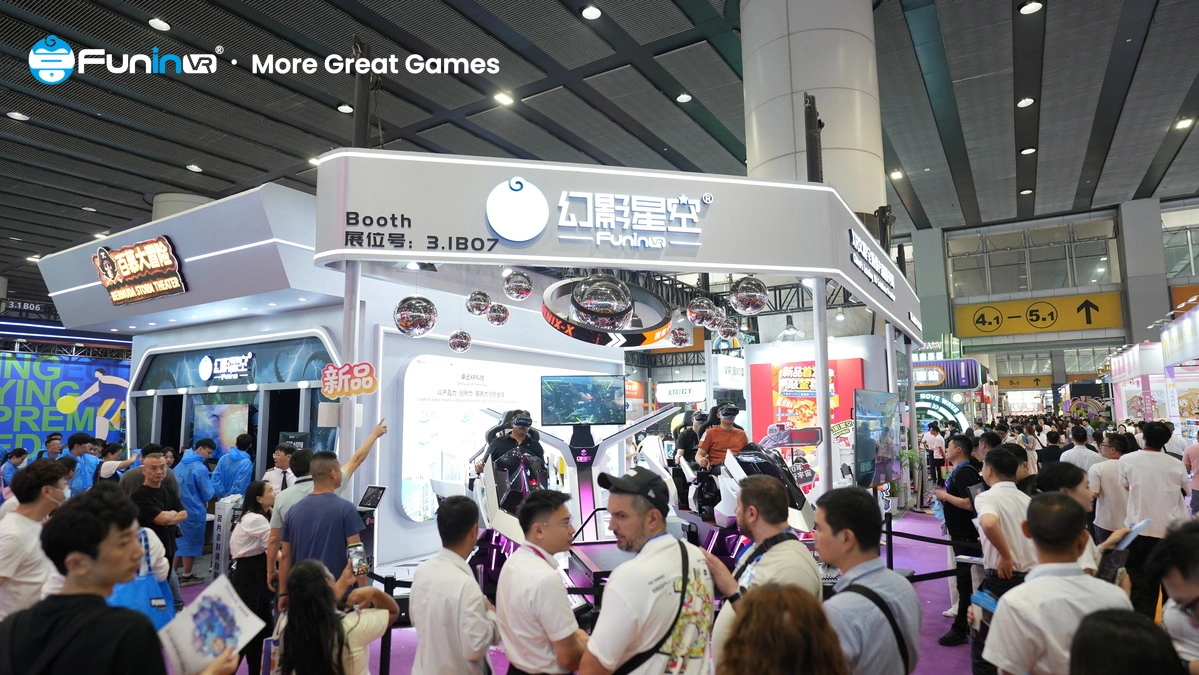
Guide de localisation de l'arcade VR: 5 Caractéristiques des sites à fort trafic qui génèrent des profits
Characteristic 2: Visibility & Easy Access
If customers can’t see your arcade, they won’t find it – even with GPS. Ground‑floor locations with large windows and eye‑catching signage perform dramatically better than upper floors or hidden corners.
What to look for:
-
Ground floor: First choice. Avoid basement or second floor unless the building has exceptional foot traffic (par ex., a major transit hub).
-
Street frontage: Large glass windows allow passersby to see the action inside. Motion simulators in motion naturally attract attention.
-
Clear signage: Your sign should be visible from the main thoroughfare. Illuminated signs are worth the investment if you operate at night.
-
Adjacent to anchors: Being next to a popular store (Target, Walmart, cinéma) funnels their traffic to your door.
Red flags: Hidden entrances, shared hallways with no direct street access, or locations behind pillars or stairwells.
Once you find a promising site, you need to plan the layout. Our VR Arcade Space Requirements Guide shows how to fit equipment into different shaped spaces.
Characteristic 3: Reasonable Rent & Favorable Lease Terms
Rent is your largest fixed cost. Overpaying can destroy your margins even with strong revenue.
What to look for:
-
Rent as percentage of expected revenue: Aim for rent to be no more than 10–15% of your projected gross monthly revenue. For a small arcade projected at 15,000/month,targetrentunder2,000.
-
Percentage rent clause: Many mall leases include base rent plus a percentage of sales above a certain threshold. This is favorable if your revenue is uncertain.
-
Short initial term with renewal options: Try for 1‑2 years initial term, with options to extend. Avoid 5‑year commitments unless you are certain of success.
-
Free rent period: Negotiate 1‑3 months free rent for build‑out and testing.
How to calculate maximum affordable rent: Estimate your monthly revenue (conservative), subtract all other costs (equipment lease, labor, utilities, marketing), and see what remains for rent. Never sign a lease that leaves no buffer for slow months.
Unsure about revenue potential? Read our How to Start a Profitable VR Arcade Business guide.
Characteristic 4: Adequate Ceiling Height & Electrical Capacity
Many new arcade owners forget to check the building’s physical specs – an expensive mistake.
Ceiling height requirements:
-
VR simulators with motion (par ex., OVNI magique VR, 6 Sièges VR Dark Mars): Minimum 9 ft (2.75 m). Some larger models may need 10 ft.
-
5D/9D cinemas: 10–12 ft recommended.
-
Dome or track theaters: 12–15 ft minimum.
Electrical requirements:
-
Standard VR simulators: 110–240V, 15‑20 amp circuits. Most commercial spaces have this.
-
Multiple machines: Add up the amperage. A typical 6‑seat simulator draws ~15 amps. Four such machines may require a dedicated sub‑panel.
-
Always have a licensed electrician inspect before signing.
How to check: Bring a tape measure and a flashlight during your site visit. Take photos of the electrical panel. Ask the landlord for building plans if possible.
Characteristic 5: Complementary Neighbors, Not Direct Competitors
Being near other entertainment options can actually boost your business – as long as they don’t directly compete for the same wallet.
Good neighbors:
-
Restaurants and cafes (customers look for an activity after eating)
-
Cinemas (people waiting for a movie may play a quick VR game)
-
Children’s play areas (parents look for nearby entertainment)
-
Bowling alleys, mini‑golf, escape rooms (different experiences, same target market)
Bad neighbors:
-
Another VR arcade within walking distance (direct competition)
-
Loud, rowdy bars that may attract a different crowd
-
Businesses with incompatible hours (par ex., an office building that empties at 6 PM)
Competitor check: Search Google Maps for “VR arcade”, “virtual reality”, “gaming cafe” within a 1‑mile radius. If you find more than one direct competitor, reconsider the location unless you have a clear differentiator (price, equipment quality, theme).
How to Evaluate a Potential Site: A Simple 5‑Step Process
-
Count foot traffic: Spend 3 hours on a Saturday afternoon at the proposed location. Count people passing the entrance. Multiply by daily hours to estimate daily foot traffic.
-
Survey nearby businesses: Ask 5‑10 neighboring stores how their weekday vs. weekend traffic compares. They’ll often share honest insights.
-
Test the commute: Drive or walk from the nearest highway exit or public transit stop. Is it easy to find?
-
Check local zoning: Confirm that amusement devices are permitted. Some cities have specific licenses for “arcades” with age restrictions.
-
Negotiate lease terms: Use the data you collected (foot traffic counts, competitor analysis) to justify lower rent or concessions.
Common Location Mistakes to Avoid
-
Choosing cheap rent over foot traffic: A low‑rent location in an industrial park will not get walk‑ins. You’ll spend your entire marketing budget trying to pull people in.
-
Signing a long lease without an exit clause: What if the mall loses its anchor store? Include a clause allowing you to terminate if foot traffic drops by a certain percentage.
-
Ignoring parking and accessibility: If customers can’t park within 5 minutes of walking, many will drive away.
-
Overlooking seasonal fluctuations: Tourist zones may be packed in summer but empty in winter. Ask for traffic data across all seasons.
A great location won’t guarantee success, but a bad location almost guarantees failure. Use the five characteristics above as a checklist when visiting potential sites. Measure foot traffic, check ceiling height, talk to neighbors, and negotiate lease terms that protect you.
Once you’ve found your spot, the next step is selecting the right equipment mix for that space. FuninVR offers free site planning and layout advice – even before you purchase.
Ready to find your ideal location? Contact our team and we’ll share a checklist template plus a free consultation on equipment fit for your space dimensions.