 ฟันอินVR
What’s the Price Range for a VR Motion Simulator?
As location-based entertainment continues to grow worldwide, VR motion simulators have become a core attraction in shopping malls, amusement parks, VR arcades, and themed entertainment venues. For commercial buyers, understanding the price range of a VR motion simulator is a critical step in planning equipment procurement and evaluating return on investment.
Unlike consumer VR products, commercial VR motion simulators are complex systems that integrate motion platforms, industrial control systems, VR hardware, and interactive software. เป็นผลให้, prices vary significantly depending on configuration, performance level, and intended commercial use. This guide explains typical price ranges and the key factors buyers should consider before purchasing.
A VR motion simulator is a commercial VR device that synchronizes immersive virtual reality visuals with physical motion. Using motorized platforms, the simulator can reproduce movements such as pitching, rolling, การสั่นสะเทือน, acceleration, and impact effects, creating a more realistic and engaging experience for users.
Commercial VR motion simulators are widely used for entertainment, simulation rides, VR cinemas, and experiential marketing. Compared to standard VR setups, they offer higher immersion, stronger visual-motion synchronization, and increased customer engagement.
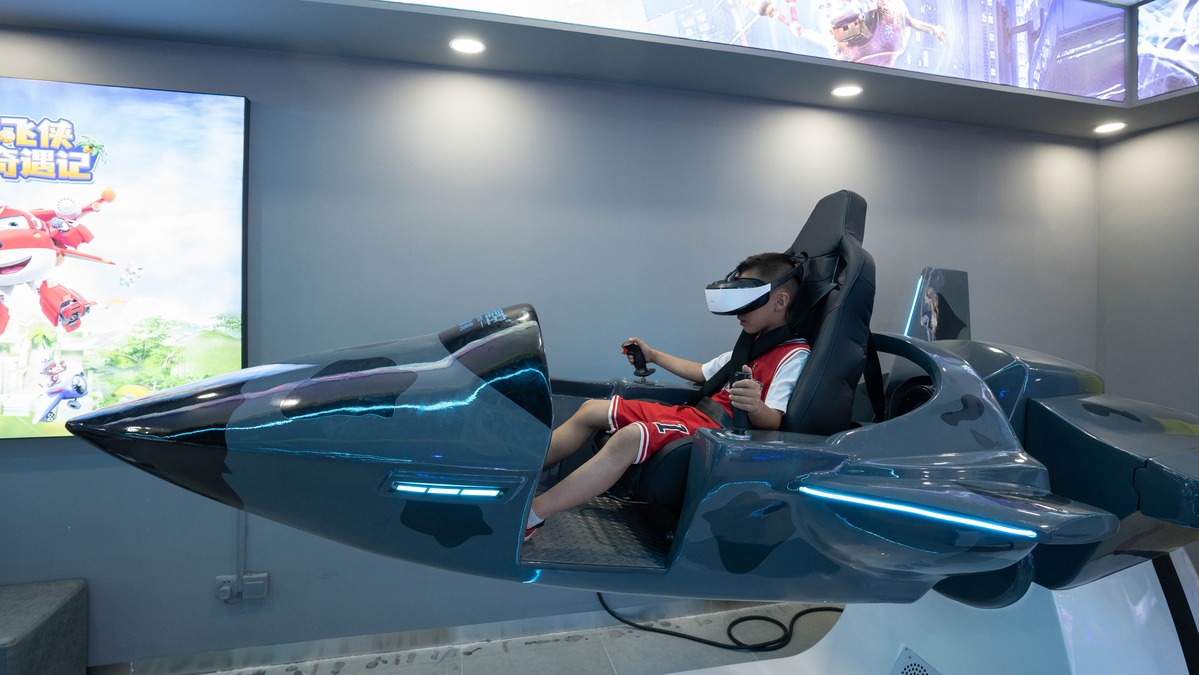
What’s the Price Range for a VR Motion Simulator?
1.Entry-Level VR Motion Simulators
Price range: USD 5,000 – 12,000
Entry-level VR motion simulators are typically single-seat or compact dual-seat systems designed for small venues or entry-level commercial use. These models focus on affordability and ease of installation.
Typical specifications:
-
2DOF or basic 3DOF motion platform
-
Compact mechanical structure
-
Consumer or semi-industrial VR headsets
-
Pre-installed standard VR content
These simulators are suitable for low to moderate daily operation but are not intended for heavy-duty commercial workloads.
2.Mid-Range Commercial VR Motion Simulators
Price range: USD 15,000 – 35,000
Mid-range systems represent the most common choice for professional VR arcades and shopping mall installations. They provide stronger motion feedback, higher system stability, and improved durability.
Typical specifications:
-
3DOF to 6DOF motion systems
-
Single-seat or multi-seat configurations
-
Industrial-grade motors and controllers
-
Commercial VR headsets and PCs
-
Optimized motion-to-content synchronization
This category offers an excellent balance between cost, immersion, and long-term operational reliability.
3.High-End and Custom VR Motion Simulators
Price range: USD 40,000 – 100,000+
High-end VR motion simulators are designed for flagship venues, amusement parks, and large-scale entertainment projects. These systems are often custom-built based on venue layout, capacity requirements, and branding needs.
Typical specifications:
-
Full 6DOF or multi-axis motion platforms
-
Multi-seat cabins or enclosed simulators
-
Heavy-duty steel structures
-
Advanced industrial control systems
-
Custom VR content and software integration
These simulators are engineered for intensive daily operation and maximum throughput.
Key Factors That Affect VR Motion Simulator Cost
Motion Platform and Degrees of Freedom (DOF)
Higher DOF systems require more complex mechanical design, stronger actuators, and advanced control algorithms, directly increasing cost.
Seating Capacity and Throughput
Multi-seat simulators increase revenue potential but also require reinforced structures and synchronized motion control.
Hardware Quality
Industrial-grade motors, controllers, and VR hardware significantly improve durability and lifespan, which impacts pricing.
Control System and Safety Features
Commercial VR motion simulators must include emergency stop systems, overload protection, and stable control software.
Software and Content Integration
Content licensing, custom motion tuning, and centralized management software can also influence total cost.
How to Choose the Right VR Motion Simulator for Your Venue
When evaluating VR motion simulator prices, buyers should consider more than just the initial purchase cost:
-
Venue size and available space
-
Expected daily operating hours
-
Target customer experience (family, thrill rides, premium users)
-
Maintenance requirements and long-term reliability
-
Expected ROI and payback period
Selecting the right configuration helps avoid unnecessary costs while maximizing operational efficiency.
The price range of a VR motion simulator reflects its overall system design, build quality, and suitability for commercial operation. From entry-level systems to high-end custom simulators, each category serves different business needs and budgets.
For commercial buyers, understanding these differences is essential for making informed procurement decisions. A properly selected VR motion simulator not only delivers immersive experiences but also supports stable operation and sustainable returns.