 Divertimento VR
Cos'è un cinema 9D?
The term 9D movie theater has become a buzzword in the location-based entertainment industry, promising an experience far beyond traditional cinema. But what exactly does it entail? In sostanza, a 9D movie theater is not about a new film format; it is a sophisticated, multi-sensory immersive attraction that combines 3D visuals with a synchronized motion platform, environmental effects, and often interactive elements. The “9D” label is primarily a marketing concept representing the layering of numerous sensory stimuli to create a powerful feeling of presence within the on-screen action.
Unlike a passive movie-watching experience, a 9D theater places the audience at the center of the story. You don’t just watch a roller coaster—you feel every climb, drop, and bank. You don’t just see a jungle—you feel the mist, smell the foliage, and sense creatures moving around you. It is a short-form, high-impact experience designed for venues like Theme parks, shopping malls,VR Arcades and Family Entertainment Centers (FECs) where creating a memorable, shareable moment is key.
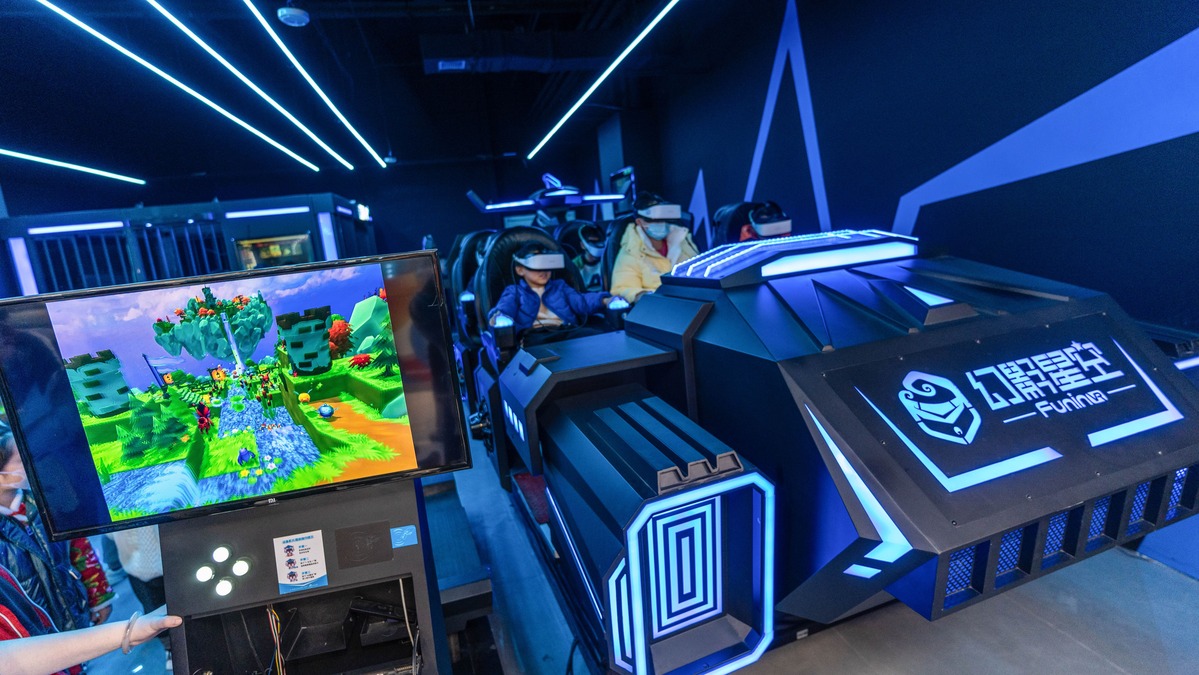
Core Technology: The Components of a 9D Experience
A professional 9D theater system is an integrated suite of technologies working in perfect harmony. Here’s what constitutes the “dimensions” beyond the standard 3D film:
-
3D Visual Foundation: High-brightness digital projection or VR headsets provide the stereoscopic visual depth, creating the initial illusion of a world extending beyond the screen.
-
The Motion Platform (The 4th-6th Dimensions – Movement): This is the system’s backbone. Seats are mounted on a platform capable of movement on multiple axes:
-
Pitch (tilting forward/backward)
-
Roll (tilting side-to-side)
-
Heave (moving up/down)
-
Surge, Sway, Yaw (in higher-end systems)
Questo synchronized motion physically connects viewers to the on-screen movement, simulating acceleration, impacts, and flight.
-
-
Environmental Effects (The 7th-8th Dimensions – Touch & Smell): This system engages other senses to deepen immersion:
-
Touch: Strategically placed nozzles produce vento, water mist, E air puffs. Leg ticklers and seat vibrotactors provide localized touch sensations.
-
Smell: Scent generators release programmed aromas like ocean salt, gun smoke, or flowers at precise moments.
-
Ambiance: Fog machines, bubble makers, and strobelights enhance specific scenes.
-
-
Interactivity (The Potential 9th Dimension – Agency): Some advanced systems incorporate an interactive layer, such as handheld laser blasters or touch-sensitive panels, allowing audiences to influence the narrative or compete for scores, transforming them from viewers into participants.
The Typical 9D Theater Experience Flow
-
Briefing & Preparation: Guests enter a themed pre-show area, are given simple instructions, and may be equipped with 3D glasses or interactive devices.
-
Immersion: The show begins (typically 5-15 minutes). All effects—motion, vento, scents—are triggered in millisecond-accurate synchronization with the film’s action cues.
-
Climax & Conclusion: The experience builds to an intense climax before winding down. Guests often exit with a strong emotional and physical memory of the “ride.”
Primary Applications and Business Context
9D movie theaters are exclusively commercial attractions. You will not find them in a standard cinema multiplex. They are engineered for:
-
Theme Parks & Tourist Attractions: As compact, high-throughput rides with easily changeable content.
-
Shopping Malls & FECs: As prime anchor attractions that drive foot traffic and offer a premium-priced experience.
-
Museums & Science Centers: As engaging educational tools for simulating historical events or natural phenomena.
-
Standalone VR/Immersion Arcades: As a flagship product offering.
For operators, the investment is justified by a strong Return on Investment (ROI). The intense, short-duration experience allows for high customer turnover, commands a premium ticket price, and generates powerful word-of-mouth marketing due to its novelty and intensity.
While the “9D” moniker is more descriptive than scientifically rigorous, the technology it represents is both real and effective. A 9D movie theater is a masterclass in sensory design, leveraging established technologies—motion simulation, environmental effects, and immersive visuals—to create a compelling, emotionally resonant experience that cannot be replicated at home.
It stands as a testament to the evolution of narrative from passive watching to active feeling. For businesses in the experience economy, a well-executed 9D theater is not a gimmick; it is a versatile and profitable tool for captivating audiences and creating lasting memories.