 Divertimento VR
Are VR Machines Safe for All Ages?
COME Macchine VR become more common in arcades, entertainment centers, shopping malls, and tourist attractions, one question comes up again and again — are VR machines safe for all ages?
The short answer is: VR can be a safe and amazing experience for most people, but it is not a one-size-fits-all activity. Safety depends heavily on the user’s age, specific health, the type of equipment, and how it is used.
Let’s break down the key safety considerations across different age groups to help you make informed decisions.
Before looking at specific ages, it’s helpful to understand the common concerns associated with VR:
-
Motion Sickness (Cybersickness): This is the most frequent issue. It happens when your eyes perceive motion in the virtual world, but your inner ear and body feel stationary. This sensory conflict can cause dizziness, nausea, and sweating.
-
Eye Strain and Visual Development: VR headsets place screens very close to the eyes and require the eyes to focus on a fixed plane while converging on objects at different distances. For developing visual systems, this raises questions for ophthalmologists.
-
Physical Safety: When immersed, users cannot see their real surroundings. This creates a risk of tripping, bumping into walls or furniture, or hitting other people.
-
Psychological Impact: Intense or frightening content can cause anxiety, distress, or temporary disorientation, especially in younger children who may struggle to separate the virtual experience from reality.
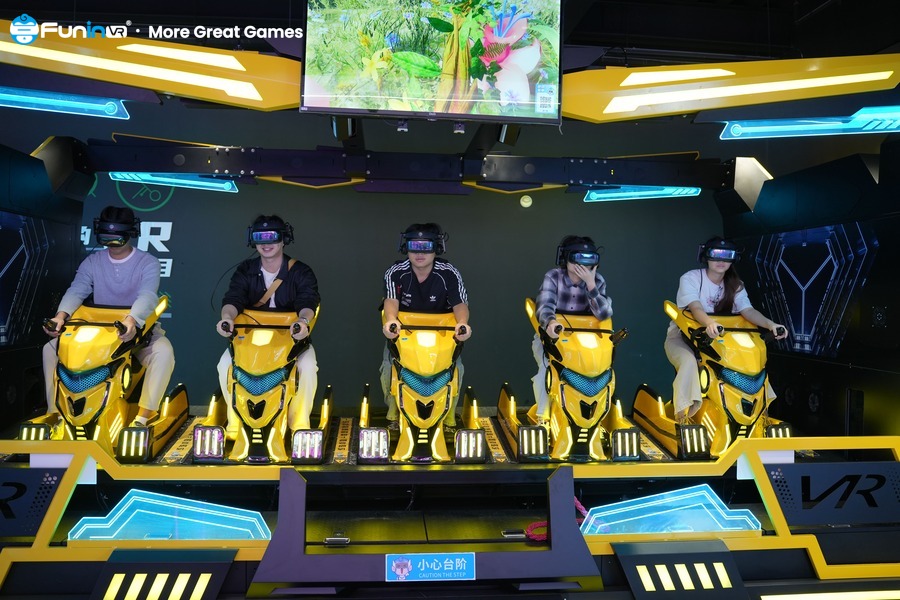
Safety Starts with Commercial-Grade Design
Not all VR machines are built the same. Commercial VR equipment is very different from home Dispositivi VR.
Professional VR gaming machines used in public venues are designed with:
-
Reinforced structures
-
Stable platforms
-
Industrial-grade components
-
Certified safety standards
-
Controlled motion ranges
These design elements significantly reduce physical risk, especially in high-frequency commercial use.
Motion vs. Non-Motion VR Machines
One important safety factor is whether the system includes motion.
-
Non-motion VR machines (stand-up or seated experiences) are generally suitable for a wider age range
-
Motion-based VR simulators require stricter height, age, and health guidelines
Most commercial VR systems allow operators to configure motion intensity or switch between motion and non-motion modes, making them adaptable for different users.
Age Guidelines Are About Content, Not Just Hardware
Age suitability is often misunderstood as a hardware issue. In reality, content matters just as much.
Per esempio:
-
Family-friendly interactive games are suitable for children
-
Racing, shooting, or adventure experiences are better for teens and adults
-
High-intensity motion content may not be recommended for young children or elderly users
Well-structured VR entertainment solutions separate content by age group and experience intensity, ensuring a safe and enjoyable experience for everyone.
Operational Rules Make a Big Difference
Even the safest VR machine needs proper operation.
Professional venues usually follow safety practices such as:
-
Clear age and height guidelines
-
On-site staff supervision
-
Simple safety instructions before gameplay
-
Emergency stop systems
-
Regular equipment inspection
When VR machines are operated correctly, incidents are extremely rare.
VR machines can offer safe and unforgettable entertainment for a wide range of ages, but they are not a universal toy. The key is responsible, age-appropriate use.
By understanding the risks—from motion sickness in a motion simulator to the physical hazards of an immersive VR gaming session—and by following clear guidelines, families can safely enjoy the incredible world of virtual reality. When in doubt, err on the side of caution, start slow, and prioritize comfort over prolonged play. The goal is to create amazing memories, not unpleasant ones.